

Jones Bel Air Subaru - Is the 2026 Subaru Outback more practical than the 2026 Volkswagen Atlas Cross Sport for Hunt Valley, MD commutes?
For many shoppers comparing these two SUVs, the core question is not simply which one is larger or which one has more horsepower. The better question is which one is more practical for real daily life around Hunt Valley, MD, where a vehicle may need to handle weekday commuting, school drop-offs, grocery runs, highway travel, outdoor gear, and occasional rougher road surfaces without feeling oversized or underprepared. In that kind of comparison, the Subaru Outback makes a very strong case. The Volkswagen Atlas Cross Sport is a stylish two-row SUV with a turbocharged 2.0 TSI® engine, generous cargo capacity with the rear seats folded, and a tech-forward cabin. It is a good choice for drivers who mainly want a sleek crossover with strong road presence. However, the Outback is built around a different mission: make capability, safety, comfort, and utility feel natural every day.
The 2026 Outback begins with standard Subaru Symmetrical All-Wheel Drive, 8.7 inches of ground clearance, and X-MODE® with Hill Descent Control. That combination matters because practicality is not just about how much cargo an SUV can hold. It is also about how confidently the vehicle can move through changing pavement conditions, gravel driveways, uneven parking areas, steep ramps, and longer highway stretches. The Atlas Cross Sport offers available 4MOTION® all-wheel drive, but front-wheel drive is standard. For shoppers who want all-wheel drive confidence without having to select a specific drivetrain configuration, Subaru keeps the decision simple. At Jones Bel Air Subaru, serving Hunt Valley, Owings Mills, and Glen Burnie, we see many drivers choose the Outback because its capability is not treated like an afterthought. It is part of the vehicle’s foundation.
Why practicality starts with standard capability
A practical SUV should reduce second-guessing. With the Outback, drivers do not have to wonder whether all-wheel drive is included, because Subaru Symmetrical All-Wheel Drive is standard across the lineup. This system is designed to send power to all four wheels for balanced traction and predictable handling. The 2026 model also benefits from a revised all-wheel drive system with faster center differential lockup, helping reduce wheelspin, and it incorporates steering angle data to support stability when turning or cornering. For commuters who spend time on I-83, York Road, local business corridors, or winding roads outside the most developed areas, that added confidence can be valuable.
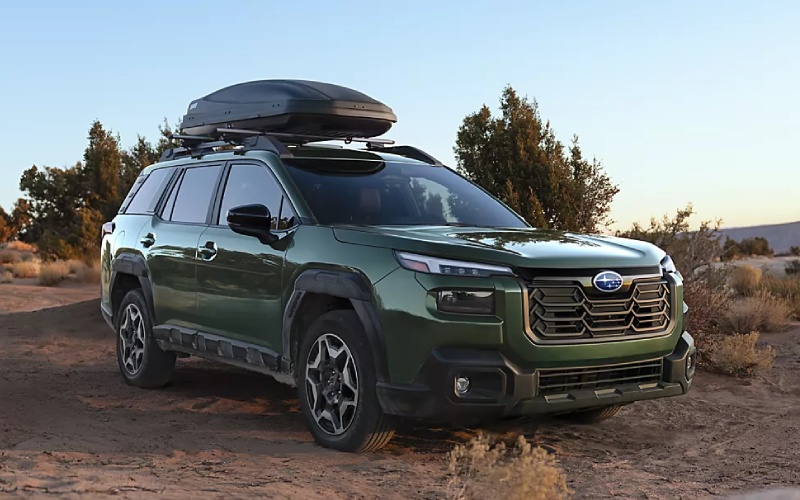
The Volkswagen Atlas Cross Sport has its own strengths. Its turbocharged engine produces 269 horsepower and 273 pound-feet of torque, and available 4MOTION® all-wheel drive can improve traction. Still, Subaru’s advantage is the way capability is integrated with the entire vehicle. The Outback includes 8.7 inches of ground clearance on every standard model, while the Wilderness trim raises that to 9.5 inches and adds all-terrain tires, a raised suspension with electronically controlled dampers, an aluminum alloy front skid plate, and Dual-function X-MODE® with Hill Descent Control. That gives the Outback more range for drivers who want one vehicle for commuting and recreation.
How do the cabins compare for daily use?
Interior practicality is where the Outback continues to feel especially well thought out. The 2026 redesign adds more passenger and cargo space than any previous Outback, including 34.6 cubic feet of cargo capacity behind the rear seats. The cargo area is taller than before, and the load floor width is designed to make loading bulky items easier. Subaru also added flexible interior utility hooks and a configurable, washable tonneau cover made from recycled materials. This cover can help separate clean and dirty items, shield cargo, or protect the rear bumper while loading. These are small details, but they add up for drivers who use an SUV as a daily tool.
The Atlas Cross Sport offers an impressive 77.6 cubic feet of cargo capacity with the rear seats folded, so it has an advantage for maximum space when configured for hauling. But for many everyday users, practicality depends just as much on how the space is organized and how comfortable the cabin feels during regular driving. The Outback adds new low-fatigue seats mounted directly to the chassis, a quieter cabin with sound-absorbing materials, larger door bottle holders that can fit 32-ounce bottles, redesigned cupholders, and dedicated hard-button and knob climate controls. The standard 12.1-inch Subaru Multimedia system and standard 12.3-inch full digital gauge cluster also create a clean, modern information layout without overwhelming the driver.
- Outback interior advantage: More thoughtful storage details, a washable cargo solution, standard large digital displays, and available heated and ventilated front seats.
- Atlas Cross Sport interior advantage: Larger maximum cargo volume with the rear seats folded and a stylish cabin presentation.
- Best fit for daily practicality: The Outback is better for shoppers who value organization, comfort, and built-in utility as much as open cargo space.
Which SUV offers the better driver-assist technology story?
Safety and driver assistance play a major role in practical ownership, especially for drivers who regularly deal with highway traffic or longer commutes. Every 2026 Outback includes the latest-generation EyeSight® Driver Assist Technology. Subaru lists features such as Front Pre-Collision Braking, Adaptive Cruise Control, Lane Centering, Lane Departure Warning, Lane Sway Warning, Front Cross Traffic Braking, Acceleration Override Assist, Emergency Stop Assist, and a Vibrating Haptic Steering Wheel. The updated system uses three forward-facing cameras and newly added radar sensors, helping expand the vehicle’s awareness of its surroundings.
Available Outback safety features go even further. Select trims can offer Hands-Free Driving Assist for driver-supervised highway travel up to 85 mph on designated highways. Available Emergency Stop Assist with Safe Lane Selection can respond if the driver becomes unresponsive while using Advanced Adaptive Cruise Control, with the ability to help move the vehicle toward the shoulder when needed, activate hazards, notify emergency services, and unlock the doors for first responders. Available Active Lane Change Assist, Pre-Curve Speed Reduction, and Automatic Resume Assist also make the Outback feel especially advanced. The Atlas Cross Sport offers IQ.DRIVE® with hands-on, semi-automated capability and other driver assistance systems, but Subaru’s available hands-free highway support and emergency safe-lane function give the Outback a compelling edge for shoppers focused on confidence and fatigue reduction.
What about performance and engine choice?
The Atlas Cross Sport keeps things straightforward with its turbocharged 2.0 TSI® engine, rated at 269 horsepower and 273 pound-feet of torque. That output is strong and will appeal to drivers who want responsive acceleration from a midsize crossover. The Outback gives shoppers two powertrain paths. The standard revised 2.5-liter SUBARU BOXER® engine makes 180 horsepower and 178 pound-feet of torque, while available XT models and the Wilderness trim use a 2.4-liter direct-injection turbocharged SUBARU BOXER® engine with 260 horsepower and 277 pound-feet of torque. Both Subaru engines pair with a Lineartronic® CVT featuring an 8-speed manual shift mode.
The advantage for Subaru is not just engine output. It is the pairing of the BOXER® engine layout, standard all-wheel drive, revised chassis tuning, improved steering, and X-MODE® capability. The 2026 Outback also receives steering enhancements derived from a version of the WRX dual-pinion electronic power steering rack, helping create a more direct and natural steering feel. That can make the vehicle feel secure during highway cruising while remaining manageable in parking lots and tighter local streets. For shoppers who want stronger acceleration, the turbocharged Outback XT or Wilderness trims deliver a satisfying upgrade without giving up the Outback’s practical personality.
- Choose the Outback Premium or Limited: If your priority is everyday comfort, standard all-wheel drive, modern infotainment, and confident ground clearance.
- Choose an Outback XT model: If you want the same practical structure with stronger turbocharged performance.
- Choose the Outback Wilderness: If you want the most rugged version, including 9.5 inches of ground clearance, all-terrain tires, and Dual-function X-MODE®.
Frequently Asked Questions:
Is the 2026 Subaru Outback better than the 2026 Volkswagen Atlas Cross Sport for all-wheel drive confidence?
Yes, for shoppers who want all-wheel drive included as part of the vehicle’s core design, the Outback has the advantage. Subaru Symmetrical All-Wheel Drive is standard on every Outback, while the Atlas Cross Sport offers available 4MOTION® all-wheel drive but does not make it standard across the lineup.
Does the Volkswagen Atlas Cross Sport have more cargo space than the Subaru Outback?
The Atlas Cross Sport offers more maximum cargo capacity with the rear seats folded, listed at 77.6 cubic feet. The Outback counters with a smarter cargo area design, 34.6 cubic feet behind the rear seats, a taller cargo space than before, flexible utility hooks, and a configurable washable tonneau cover.
Which SUV is better for drivers who want advanced highway assistance?
The Outback is especially compelling because select trims offer Hands-Free Driving Assist, Emergency Stop Assist with Safe Lane Selection, Active Lane Change Assist, Pre-Curve Speed Reduction, and Automatic Resume Assist. The Atlas Cross Sport has IQ.DRIVE® hands-on semi-automated capability, but Subaru’s available hands-free highway support is a notable advantage.
For Hunt Valley-area drivers trying to choose the more practical SUV, the Outback is the stronger all-around recommendation. The Atlas Cross Sport deserves credit for its style, power, and maximum cargo capacity, but the Subaru offers a more complete blend of standard capability, driver-assist innovation, everyday comfort, and smart cargo design. It feels ready for commuting, errands, family routines, outdoor gear, and longer highway drives without asking the owner to compromise. If practicality means having confidence built into the vehicle from the start, the Outback makes the better case.
Request more 2026 Subaru Outback information
Categories:
Subaru Outback