


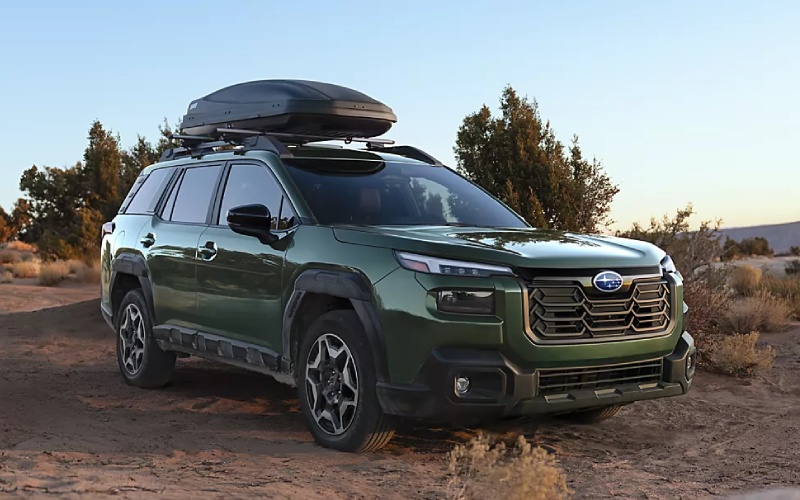
Jones Bel Air Subaru - Can the 2026 Subaru Outback’s Hands-Free Driving Assist Help Baltimore, MD Commutes?
Drivers navigating Baltimore Beltway traffic, I-95, I-83, and busy cross-county routes often look for an SUV that can make repetitive highway miles feel more manageable without taking the driver out of the decision-making process. The 2026 Subaru Outback answers that need with available Hands-Free Driving Assist, part of an expanded suite of Subaru safety and driver-assist technology designed to reduce fatigue while keeping driver supervision central to the experience.
The all-new 2026 Outback builds on Subaru’s long-running formula of standard all-wheel-drive confidence, useful ground clearance, and practical cabin space, then adds more advanced support for modern highway travel. For Baltimore-area shoppers, that combination matters. A daily route might include narrow city streets, faster highway stretches, construction zones, and changing traffic flow within a single drive. The Outback is designed to feel calm and capable across those conditions, especially when equipped with available enhanced driver-assist features.
How Hands-Free Driving Assist Works in the 2026 Outback
Subaru states that certain trims of the 2026 Outback can travel at speeds up to 85 mph hands-free on designated highways with driver supervision. This available system is not a replacement for an attentive driver. Instead, it is designed to help reduce fatigue during longer highway sections by assisting with steering support while the driver remains engaged and ready to respond.
The system works within the broader framework of EyeSight® Driver Assist Technology. For 2026, EyeSight® incorporates three forward-facing cameras and newly added radar sensors for additional support. Standard EyeSight® functions include Front Pre-Collision Braking, Adaptive Cruise Control, Lane Centering, Lane Departure Warning, Lane Sway Warning, Emergency Stop Assist, Front Cross Traffic Braking, Acceleration Override Assist, and a Vibrating Haptic Steering Wheel. Available systems expand this foundation with Hands-Free Driving Assist, Pre-Curve Speed Control, Highway Active Lane Change Assist, Highway Automatic Resume Assist, and Emergency Stop Assist with Safe Lane Selection.
Why It Matters for Baltimore, MD Driving
Highway commuting around Baltimore can involve long periods of steady traffic followed by sudden slowdowns, merges, lane changes, and curves. The 2026 Outback’s available Hands-Free Driving Assist can help make compatible highway sections feel less tiring, while available Pre-Curve Speed Control can help slow the vehicle in its lane before a curve when Advanced Adaptive Cruise Control is in use. That can be valuable on routes where traffic speed changes quickly and road geometry demands attention.
Available Highway Active Lane Change Assist is another important part of the system. Subaru explains that this feature checks whether a merge is safe when the turn signal is activated during hands-free driving, then can execute lane changes automatically. For a driver moving through highway traffic, this support can help make lane transitions smoother while maintaining the expectation that the driver remains alert and responsible.
Key Driver-Assist Benefits to Know
- Reduced highway fatigue: Available Hands-Free Driving Assist supports driver-supervised hands-free travel on designated highways.
- More awareness: Latest-generation EyeSight® uses three forward-facing cameras and added radar sensors for additional support.
- Curve support: Available Pre-Curve Speed Control can help reduce speed before curves when using Advanced Adaptive Cruise Control.
- Lane-change support: Available Highway Active Lane Change Assist can check merge conditions and assist with lane changes during hands-free driving.
- Emergency support: Available Emergency Stop Assist with Safe Lane Selection can help guide the vehicle toward a safer stop if the driver becomes unresponsive.
These systems are especially appealing because Subaru integrates driver assistance with practical vehicle design rather than treating technology as a stand-alone attraction. The Outback still has standard Subaru Symmetrical All-Wheel Drive, 8.7 inches of ground clearance, and revised X-MODE® for added confidence beyond clean, dry pavement. For many shoppers, the appeal is not just one technology, but the way Subaru combines traction, visibility, comfort, and assistance into one balanced SUV.
The Cabin Also Supports Calmer Commutes
Hands-free assistance is only part of the 2026 Outback’s commuter-friendly design. Subaru also focused on a quieter and more spacious interior. Sound-absorbing materials in the roof and headliner help refine the cabin, while aerodynamic changes reduce wind noise. New low-fatigue seats mounted directly onto the chassis help improve long-distance comfort and reduce head movement on longer drives. Subaru also notes that lateral sway has been reduced compared to the previous model, which can contribute to a more settled feel.
The technology layout is another highlight. Every 2026 Outback comes with an all-new Subaru 12.1-inch Multimedia system and a 12.3-inch full digital gauge cluster. Wireless Apple CarPlay® and Android Auto™ integration are standard, and the digital gauge cluster offers selectable views, including Calm Mode, Normal Mode, map-focused views, smartphone navigation views, and an EyeSight®-focused Mode. For a commuter, this means important information can be presented clearly without overwhelming the driver.
Which Outback Shoppers Should Consider Hands-Free Driving Assist?
Available Hands-Free Driving Assist makes the most sense for drivers who spend significant time on designated highways and want extra support during longer stretches. It can be a strong fit for commuters traveling between Baltimore, surrounding suburbs, and regional work destinations, as well as families planning frequent highway travel. Shoppers who value the latest safety innovation should review the Touring and Touring XT trims carefully, since Subaru lists Enhanced EyeSight Driver Assist Technology on Touring models with Hands-Free Driving Assist, Emergency Stop Assist with Safe Lane Selection, Active Lane Change Assist, Pre-Curve Speed Reduction, and Automatic Resume Assist.
It is also worth comparing powertrains during a test drive. The revised 2.5-liter SUBARU BOXER® engine is designed for balanced daily use, while XT models and Wilderness use a 260-hp 2.4-liter direct-injection turbocharged SUBARU BOXER® engine. If highway merging, passing power, and fully loaded travel are high priorities, the turbocharged option may be worth evaluating.
What to Ask During a Test Drive
- System availability: Ask which trims include available Hands-Free Driving Assist and related enhanced EyeSight® functions.
- Highway compatibility: Discuss how designated-highway operation works and what driver supervision requires.
- Display preferences: Try the EyeSight®-focused Mode and Calm Mode in the 12.3-inch full digital gauge cluster.
- Comfort evaluation: Spend time adjusting the low-fatigue seats, steering wheel, mirrors, and climate controls.
- Powertrain feel: Compare the standard engine and turbocharged SUBARU BOXER® engine if both align with your needs.
During a test drive, focus on how the Outback feels as a complete vehicle. Steering response, seat support, visibility, display clarity, and control placement matter just as much as advanced technology. Subaru also moved climate functions to dedicated hard-button and knob controls below the touchscreen, a practical decision that can make everyday adjustments easier and more intuitive.
Frequently Asked Questions:
Does Hands-Free Driving Assist mean the 2026 Subaru Outback drives itself?
No. Available Hands-Free Driving Assist is a driver-supervised system for designated highways. The driver must remain attentive, prepared to steer, brake, and respond as needed. It is designed to reduce fatigue, not replace driver responsibility.
What other systems work with Hands-Free Driving Assist?
Available enhanced systems can include Emergency Stop Assist with Safe Lane Selection, Active Lane Change Assist, Pre-Curve Speed Reduction, and Automatic Resume Assist. These features work with the broader EyeSight® Driver Assist Technology suite.
Is the 2026 Subaru Outback still capable beyond highway driving?
Yes. Every 2026 Outback includes Subaru Symmetrical All-Wheel Drive and 8.7 inches of ground clearance. Wilderness models add 9.5 inches of ground clearance, all-terrain tires, an aluminum alloy front skid plate, and Dual-function X-MODE® with Hill Descent Control.
The available hands-free technology in the 2026 Outback is best understood as a smart extension of Subaru’s confidence-first approach. It supports the driver during compatible highway travel, while the rest of the vehicle continues to deliver the traction, cargo space, comfort, and usability that have made Outback a long-standing favorite. For Baltimore-area drivers who want a practical SUV with modern driver assistance, the 2026 Outback is a compelling vehicle to place high on the shopping list.
Request more 2026 Subaru Outback information
Categories:
Subaru Outback